One of the most ingenious revivals of ancient laws was the so-called "distraint of knighthood." According to an unrepealed statute of Edward, all landholders with a stipulated income were required to become knights. In the days of Edward the law had been designed to provide a properly equipped force of armed horsemen. Now, when 40-pound incomes had become far more common, it was used to mulct a very large group. Men had to pay a heavy fee if they became knights, and they were fined if they refused.
(from A History of England and the British Empire)
Saturday, May 19, 2018

Friday, May 18, 2018
Thirteen colonies - who cares?
The West Indian Islands attracted even more settlers than all the mainland colonies together. An unsuccessful expedition to colonize Guiana settled on one of the islands, and before long Englishmen were swarming in great numbers to the Caribbean, the little island of Barbados, only twenty-one miles long and less than fifteen miles wide, having more settlers than all New England.
(from A History of England and the British Empire)
(from A History of England and the British Empire)
Thursday, May 17, 2018
A pretty fair profit margin
The profits of the East India Company showed a marked jump in the latter half of the century, when annual dividends sometimes reached 20 and even 50 per cent, though the English company could not match the dividend record of its Dutch rival, which averaged 18 per cent for two centuries.
(from A History of England and the British Empire)
(from A History of England and the British Empire)
Wednesday, May 16, 2018
Just take an X-ray
If you want to know what a wet noodle looks like, just take an X-ray of the spine of most of the Republicans in Washington today.
Just look Italian
You did not actually have to be Italian: you just had to look Italian, and you could make a lot of money in Hollywood back in the Golden Age playing gangsters and other bit parts. Swarthy skin and a heavy beard was about all it took.
Tuesday, May 15, 2018
Free people are skeptical people
With the precedent of Magna Carta in mind, they drew up a "Petition of right," which hit directly at the four main grievances - arbitrary taxation, arbitrary imprisonment, billeting, and martial law; for Parliament refused to be satisfied with a general promise of good behavior upon the part of the king.
(from A History of England and the British Empire)
NEVER trust your rulers, no matter how much you may be agreed with them politically. ALWAYS assume that they will abuse their power. A skeptical people is a free people.
(from A History of England and the British Empire)
NEVER trust your rulers, no matter how much you may be agreed with them politically. ALWAYS assume that they will abuse their power. A skeptical people is a free people.
Monday, May 14, 2018
Lord Buckingham's failure as a military stragetist
Expeditions were dispatched to Spain, to France, and to Germany - six expeditions in four years, and every one a miserable failure! Years of unpreparedness and neglect told their story. It always has taken England a considerable time to recover from the military stagnation of a long peace; for the Englishman engaged in civilian pursuits is quite unwarlike. There was no rush to arms; press gangs had to recruit by forced draft. Few communities allowed their better men to be rushed from their homes to what, in a time of unpreparedness, meant probable death by starvation or disease, if not on the battlefield. The army was composed of riffraff; the navy had been allowed to decay.
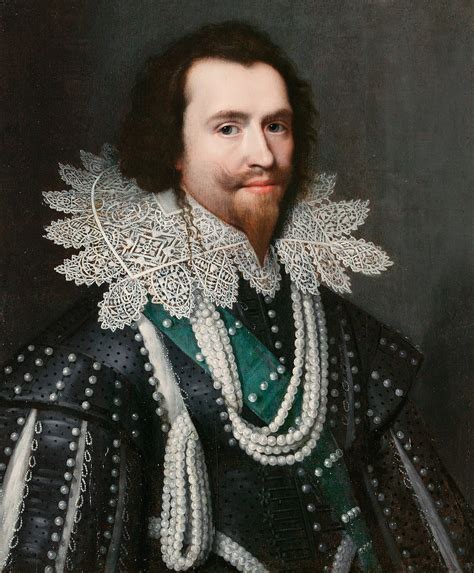
(From A History of England and the British Empire. This describes Britain in the early years of Charles I (1624-1628) when the country was under the control of George Villiers, Duke of Buckingham.)
(From A History of England and the British Empire. This describes Britain in the early years of Charles I (1624-1628) when the country was under the control of George Villiers, Duke of Buckingham.)
Sunday, May 13, 2018
Martin Kosleck: hitting back at the Nazis
If you are familiar with movies of the World War II period, then the face of Martin Kosleck is a familiar one to you. He spoke out against Hitler and the Nazis, and decided to leave Germany in 1931. He was subsequently placed on the Gestapo list of "undesirables."
Kosleck appeared in a number of films during that period, frequently portraying Nazis in a particularly uncomplimentary way. Many Germans resented being asked to play Nazis, but Kosleck viewed it as a chance to strike back against them in a small way. He played Joseph Goebbels five times.

Kosleck appeared in a number of films during that period, frequently portraying Nazis in a particularly uncomplimentary way. Many Germans resented being asked to play Nazis, but Kosleck viewed it as a chance to strike back against them in a small way. He played Joseph Goebbels five times.
Saturday, May 12, 2018
How many does this describe?
"Exceedingly charming, but one who did not leaven his ambitious ideas with common sense." This is a description of George Villiers, Duke of Buckingham in A History of England and the British Empire. I wonder how many young men throughout history that expression might have described.
Friday, May 11, 2018
King James vs. the House of Commons
The king told the Commons that they "derived all matters of privilege from him and by his grant." They replied that their "privileges and liberties are of right and due inheritance no less than our very lands and goods," and that "they cannot be withheld from us, denied, or impaired, but with apparent wrong to the whole state of the realm."
(from A History of England and the British Empire)
(from A History of England and the British Empire)
Thursday, May 10, 2018
Victor Sen Yung - a remarkable life
Victor Sen Yung made his name on the screen by playing Jimmy Chan, the son of detective Charlie Chan, in that series of movies, and also cook Hop Sing on the long-running television series Bonanza. So, his is a very familiar face to my generation.
What most of his fans probably do not know, however, are the facts that made his life fairly unique in Hollywood. He was born to Chinese immigrants. His mother died when he was about four years old in the influenza epidemic that decimated the population during the World War I years. His father traveled to China to remarry, then returned with his wife to re-establish the household.
Yung majored in animal husbandry at the University of California. He joined the Army Air Force during World War II and was involved in the production of several training films.
His role as Hop Sing was no fluke, for he was a very accomplished chef, and appeared in several cooking shows on television. He also authored The Great Wok Cookbook in 1974.
The circumstances of Yung's death were unusual. He ran a small mail-order Chinese pottery business in his home, and used an oven to cure the items. He died of a natural gas leak from the oven, and he had been dead at least ten days before his body was found. Actor Pernell Robert, who portrayed Adam on the Gunsmoke program, delivered the eulogy and paid for his funeral expenses.


What most of his fans probably do not know, however, are the facts that made his life fairly unique in Hollywood. He was born to Chinese immigrants. His mother died when he was about four years old in the influenza epidemic that decimated the population during the World War I years. His father traveled to China to remarry, then returned with his wife to re-establish the household.
Yung majored in animal husbandry at the University of California. He joined the Army Air Force during World War II and was involved in the production of several training films.
His role as Hop Sing was no fluke, for he was a very accomplished chef, and appeared in several cooking shows on television. He also authored The Great Wok Cookbook in 1974.
The circumstances of Yung's death were unusual. He ran a small mail-order Chinese pottery business in his home, and used an oven to cure the items. He died of a natural gas leak from the oven, and he had been dead at least ten days before his body was found. Actor Pernell Robert, who portrayed Adam on the Gunsmoke program, delivered the eulogy and paid for his funeral expenses.
Wednesday, May 09, 2018
Champion of the common law
The common law found a doughty champion in Sir Edward Coke, Chief Justice of Common Pleas and later of King's Bench. A thoroughly disagreeable person in public and private life, Coke was, nevertheless, remarkably well grounded in the origins of the common law, his one love in life; and he proved a tough fighter in its defense. His chief contention was that the law was superior to the king, whereas James aimed to make the judges agents of royal policy - "lions under the throne," as Francis bacon, then his attorney general expressed it.
(from A History of England and the British Empire)
(from A History of England and the British Empire)
Tuesday, May 08, 2018
The rise of representative government
The long-drawn-out conflict between parliament and the four Stuart kings, based on money and religious difficulties, was to transform England into the first modern constitutional monarchy, with the House of Commons, not the king, the real ruler. The disturbances brought about by this Parliamentary conflict were to give impetus to the planting on the Atlantic coast of North America of some of the sturdiest colonies any nation has ever owned. Ever since the Norman Conquest, England had been drawn into Continental problems and had developed, despite her insular peculiarities, on the same general pattern as the rest of western Europe. Now she was to turn in the opposite direction. In a period which has been called "the Age of Absolutism" in Continental history, a time when royal autocracy was reaching its height in the chief European countries, the English Parliament was to force the crown to submit to its domination.
(from A History of England and the British Empire)
(from A History of England and the British Empire)
Monday, May 07, 2018
Raleigh - not everyone's cup of tea
Adept at intrigue, [Sir Walter Raleigh] made a habit of criticizing his superiors to their superiors and rose rapidly. He soon won the favor of the queen, who from time to time presented him with lucrative monopolies, and sufficient estates in England and Ireland to make him the most extensive landholder in the country. Historians question the familiar story of the cloak and puddle, but it was perhaps typical or the tactics by which he became the chief favorite of Elizabeth in the middle period between Leicester and Essex. Few men of Elizabethan England were more thoroughly hated than Raleigh; he was considered an insolent upstart, untrustworthy and unscrupulous, and even those who admitted his keen ability often hated him the more for it.
(from A History of England and the British Empire)
(from A History of England and the British Empire)
Sunday, May 06, 2018
Hitting the Spanish where it hurt
After two years of reconnoitering the vulnerable spots of the Spanish Main, [Sir Francis Drake] sailed from Plymouth in 1572 on a voyage of reckless adventure with two little vessels and a crew of seventy-three, only one of which had passed the age of thirty. He struck at the Isthmus of Panama, where the treasures of Peru were brought overland. With his handful of men and some Indians who hated the Spaniards, he looted the town of Nombre de Dios, on the Atlantic side, and ambushed a rich treasure train, leaving fifteen tons of silver behind because the other loot was more valuable.
(from A History of England and the British Empire. If I am not mistaken this adventure is woven into at least a couple of the famous Errol Flynn swashbuckler movies.)
(from A History of England and the British Empire. If I am not mistaken this adventure is woven into at least a couple of the famous Errol Flynn swashbuckler movies.)
Saturday, May 05, 2018
Hong Kong television series
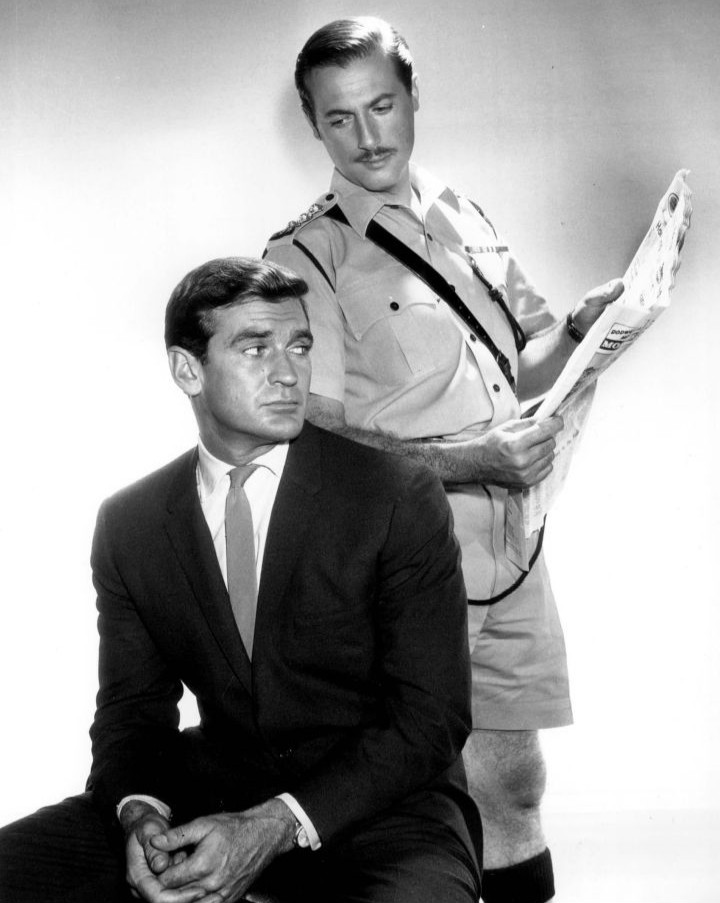
Hong Kong ran for only one season in 1960-61, but it was very well done. Rod Taylor was the star, playing a newspaper correspondent who for some reason is always getting into tight spots that somehow seem to involve a beautiful woman. His best friend is a police Chief Inspector, played by Lloyd Bochner. Many of the episodes are available on YouTube.
Friday, May 04, 2018
The difference between Elizabeth and Mary
Elizabeth's name is always associated with that of her younger and more attractive cousin and rival for the throne. Mary Stuart, the "Queen of Scots" who for years created complications for Elizabethan England. Queen of Scotland in her own name since babyhood, temporarily queen consort of France, and, as great-granddaughter of Henry VII, enjoying a title to the English throne almost as good as Elizabeth's, Mary was in a powerful position. Tall, with an exquisite pale skin and beautiful dark-brown eyes and hair, Mary had a feminine charm so irresistible that she is ranked as one of the most fascinating women of history. Passion and impulse, however, led her to throw away her many advantages and to be at times incredibly foolish. Her cold English cousin, with her masculine mind, sacrificed the woman to the queen; Mary sacrificed the queen to the woman every time. So it was that eventually Mary lost her life at Elizabeth's order.
(from A History of England and the British Empire)

(from A History of England and the British Empire)
Thursday, May 03, 2018
The Seahawks
Elizabeth also condoned, as we shall see, the raids of her seamen on the Spanish Main - a further example of how far a nation could go without actually declaring open war. Elizabethan England was full of men who were ready to fight papists or to chase galleons, with the clear understanding that if they should fail, Elizabeth and Cecil would disavow their acts to protesting ambassadors.
(From A History of England and the British Empire. The situation described here is what is depicted in the Errol Flynn movie The Seahawks.)

(From A History of England and the British Empire. The situation described here is what is depicted in the Errol Flynn movie The Seahawks.)
Wednesday, May 02, 2018
Michael Dunn - unusual detective
His was a familiar face on film and on television a couple of generations ago. Michael Dunn suffered from dwarfism and was only 3'11" tall. As he put it, he did not suffer from a lot of competition for his acting roles. According to the IMDB website, while he was waiting for his big acting break, one of the ways he supported himself was as a hotel detective, so he was not afraid to take on unusual occupations.

Tuesday, May 01, 2018
How state religions work
The Church of England was more than a matter of dogma and ritual. From one point of view it was a branch of the government. As an "established" church, its bishops were appointed and its policies were determined by the political authorities. Elizabeth herself, in order to spare the feelings of moderate Catholics, substituted, in enumerating her various titles, the expression "and so forth" where her father and brother had used "Supreme Head of the Church": but she retained full authority. Parliament even used its religious authority to decree that Wednesday, in addition to Friday, should be a meatless day, in order to encourage the fisheries.
(from A History of England and the British Empire)
(from A History of England and the British Empire)
Subscribe to:
Posts (Atom)